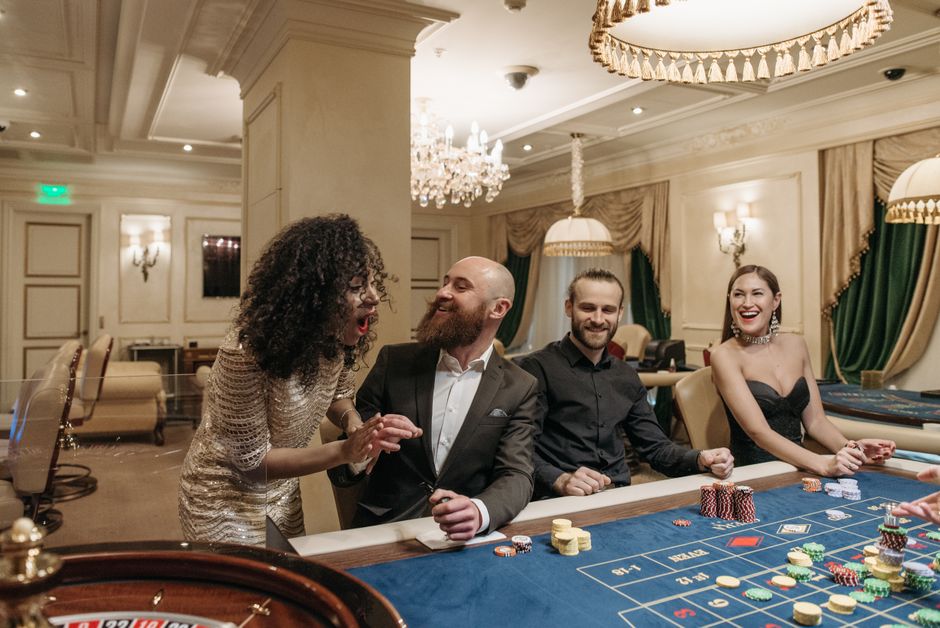
Most people walk into a casino or open a betting app with a number in their head. It's usually the amount they're willing to lose. Very few walk in with the number that actually matters: the house edge. That single percentage decides how long your money survives, how often you'll walk away up, and whether the game you love is even worth your time. Understanding it doesn't make you a pessimist. It makes you a player who stops donating to the casino's quarterly earnings report.
The House Edge, Explained Without the Jargon
Every casino game has a built-in mathematical advantage for the operator. That's the business model. What surprises newcomers is how wildly that advantage varies from game to game, and how a tiny difference compounds over hundreds of bets.
Consider blackjack with basic strategy. Played well, the house edge sits around 0.5%. Now compare that to a standard three-reel slot machine, where the edge often lands between 2% and 10%, and on some penny machines creeps even higher. Same casino floor, wildly different math.
- Blackjack (basic strategy): roughly 0.5% house edge
- Baccarat (banker bet): about 1.06%
- European roulette: 2.7% (American roulette jumps to 5.26% thanks to that extra double zero)
- Video poker (Jacks or Better, perfect play): under 1%
- Slots: anywhere from 2% to 15%, depending on the machine and jurisdiction
Here's the key insight: the house edge doesn't reset between spins or hands. It grinds away at your bankroll continuously. A 5% edge means that, in theory, every $100 wagered returns $95 over the long run. The more you bet, the closer reality gets to that average.
Why Slot Players Lose Faster Than They Realize
Slots get a bad reputation for a reason, but the reputation is often misunderstood. The issue isn't only the house edge. It's the speed.
A blackjack player at a full table might see 60 hands per hour. A slots player can spin 500 to 800 times in the same window. Combine a high edge with a high turnover rate, and the expected loss per hour skyrockets.
Run the numbers on a $1 spin, 600 spins per hour, at a 5% edge. That's $600 wagered per hour and an expected loss of $30. Do the same at a 2% edge and it drops to $12. Over a four-hour session, that's a $72 swing in expected outcomes from edge alone.
What Actually Matters on a Slot Machine
Payback percentages aren't printed on the cabinet, but they exist. Online casinos usually publish RTP (return to player) in the game info panel. Land-based players often have to look up state gaming commission reports. A few practical takeaways:
- High-volatility slots pay less often but with bigger potential hits. Low-volatility machines pay frequently in smaller amounts.
- Progressive jackpots often come with a lower base RTP, because a slice of every bet feeds the prize pool.
- Penny slots aren't inherently cheaper. If you're max-betting 50 lines at a penny each, that's 50 cents a spin, not a penny.
- RTP matters over tens of thousands of spins. In a two-hour session, variance dominates everything.
The honest truth is that no slot strategy beats the math. What you can control is stake size, session length, and which machines you choose to sit down at. Those comparing choices often turn to king88 com.
Poker Is the One Game Where Skill Flips the Script
Poker is different. There's no house edge on the pot itself. The casino takes a rake, typically capped between $3 and $6 per hand in live low-stakes games, or around 5% in online micro-stakes. That rake is the cost of doing business.
Beyond the rake, everything else is between you and the other players. A skilled player can maintain a long-term win rate against weaker opponents, which is impossible in pure chance games. That's why serious players treat poker as a skill game with variance, not a gamble with a strategy bolted on.
A few concrete habits separate winning players from break-even ones:
- Track your results by session and by stake level. Memory is unreliable. A spreadsheet isn't.
- Don't move up until you beat your current level over a real sample — that's typically 20,000+ hands, not five winning nights.
- Respect the rake. In tiny-stakes live games, the rake can eat 10%+ of the average pot. Sometimes the game isn't worth playing at all.
- Study off the table. Solvers, hand reviews, and forum discussions do more for your win rate than grinding tired at 2 a.m.
Online poker amplifies this. Multi-tabling lets you see more hands per hour, which means the rake hurts more and your edge compounds faster. It cuts both ways, depending on how good you actually are.
Betting Markets: Where Sharp Money Lives
Sports betting sits in a strange middle ground. The bookmaker's margin, called the vig or juice, is built into the odds. Standard pricing on a coin-flip bet is -110 on both sides, which translates to roughly a 4.5% hold. That margin is the sportsbook's edge, and unlike poker, you can't avoid it by being smarter than the guy next to you.
What you can do is shop lines. Different books price the same game differently, and the gap is often large enough to matter. A moneyline at -105 versus -115 is a meaningful difference over a season. Serious bettors keep accounts at multiple sportsbooks and always take the best available number before placing a wager.
A handful of habits worth building:
- Never bet on impulse during live play. In-play markets have higher margins than pre-game.
- Line movement tells a story. If a line moves sharply against the public, sharp money is likely on the other side.
- Parlays and same-game multis come with inflated margins. Fun, but expensive.
- Promotions and boosts can beat the vig temporarily. Treat them as the exception, not the plan.
The Questions Worth Asking Before You Play
Instead of asking "am I due for a win," try a more useful set of questions. What's the house edge on this game? How many bets per hour am I actually making? What's my realistic bankroll for this session, and what's my walk-away number? Am I playing for entertainment or trying to beat the math? Answering honestly changes how you choose games, size your stakes, and walk away.
There's nothing wrong with playing games where the house has an edge. Those games built the industry, and they're genuinely fun. The problem is playing them blindly, convinced that instinct or a hot streak can override arithmetic. It can't, not over the long run. The players who last are the ones who understand exactly what they're buying with every bet, and who treat the maths as information rather than bad news.
Know the edge, respect the variance, and play games you actually enjoy. That's the whole strategy.