The first cold morning changes what a kitchen is for. Through August it is a place of quick suppers and tomatoes ripening on the windowsill; by October it has become a sorting station, with crates by the back door, newspaper over the table and a pan of syrup on the go. Autumn is the busiest season in a preserving kitchen, and the trick is not to own more equipment but to work in the right order: eat the soft fruit first, store the sound fruit, preserve the rest.
Most autumn waste happens in the first fortnight. A tray of pears left in the hall goes over; a net of onions kept in a warm cupboard starts to sprout. Handle the main crops of the season properly now and February's pantry will look as good as October's kitchen.
Start with an honest harvest audit
Before you think about jars, sort everything onto three trays. This is the single most useful habit in a preserving kitchen, and it takes twenty minutes.
- Eat first: anything bruised, split or already softening. Windfalls and wasp-nibbled fruit belong in the week's cooking — a crumble, a pan of apple sauce.
- Store: sound, unblemished fruit with the stalk attached. Handle it as little as possible, and never wash it before storing. Damp is the enemy.
- Preserve: everything in between. Second-grade fruit makes excellent chutney, jelly, fruit leather and bottled halves, and it does not need to look perfect.
One bruised pear can turn a whole box, so keep checking. A quick inspection every Sunday is enough.
Apples and pears: the long keepers
Not every apple keeps. Discovery, Worcester Pearmain and most early dessert varieties are best eaten within a fortnight of picking. The ones still good in January are the later, firmer sorts: Bramley, Egremont Russet, Ashmead's Kernel, Spartan, Winston. Among pears, Conference stores reasonably well; Comice and Williams are better eaten or bottled soon after picking.
Storing them
Wrap each apple in newspaper, or stand them in single layers in shallow boxes so they do not touch. Pears are picked slightly underripe and finish ripening off the tree, so check them weekly — a pear can go from firm to floury in days. The ideal spot is cool, dark, humid and frost-free: an unheated back room, a garage that does not drop below freezing, or a fridge drawer for small quantities.
Keep apples and pears away from onions, garlic and potatoes. Ripening fruit gives off ethylene gas, which pushes potatoes to sprout and onions to soften, while the vegetables make the fruit go over faster in return.
Drying, bottling and sauce
Apple rings and pear halves dry well. Peel and core, slice to about 5mm, and drop the slices into water with a squeeze of lemon to stop them browning. Dry at around 50–60°C until leathery but still pliable — a dehydrator, or an oven on its lowest setting with the door propped ajar. Bottled pears in a light syrup are worth the effort; use a tested recipe and process the jars in a water bath rather than trusting an oven method.
Onions, shallots and garlic: cure them properly
Onions fail in storage for one reason more often than any other: they were not dried enough. Lift them on a dry day and leave them on the soil, a rack or a slatted tray somewhere airy for two or three weeks, until the necks are papery and the skins rustle. Do not cut the tops off until then — the leaves are feeding the bulb as they dry.
After curing, plait them, tie them into nets, or lay them in single layers in a crate. Cool, dry, dark and well ventilated beats cold and sealed every time; a draughty garage is better than a cupboard beside the oven. Check the nets every few weeks and remove any bulb that feels soft, because one rotten onion will work its way through the lot.
Squash and pumpkins: cure, then keep
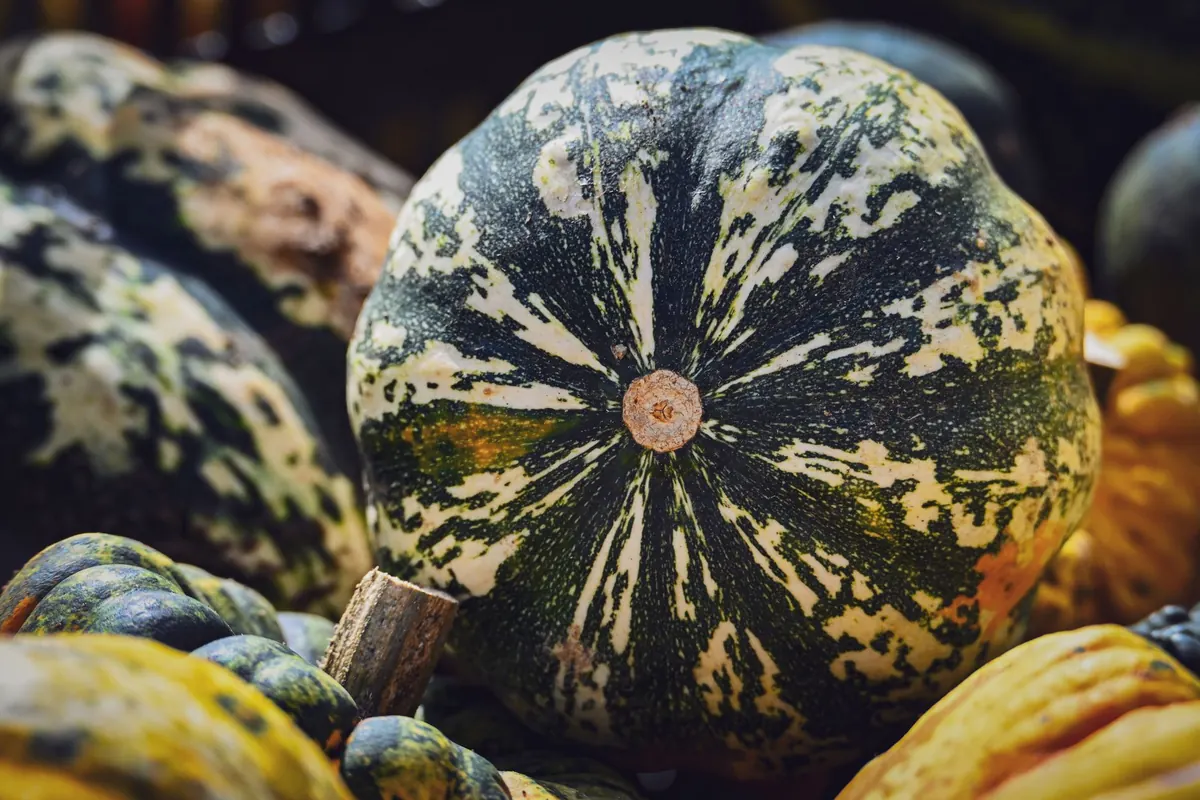
Leave winter squash on the plant as long as you dare, and cut them with a good length of stem — the stem is the plug that keeps them sound. Handle them like eggs; a small knock becomes a soft spot by December.
Cure the crop somewhere warm and dry for ten days to two weeks, which hardens the skin and seals minor grazes. Then move them to a cool room at around 10–15°C, spaced so air moves between them, and check the stem end and the base each time you walk past. Once cut, a squash keeps for a few days in the fridge. Any surplus is easy to deal with: roast in chunks, freeze in bags, or purée and freeze in portions for soups and cakes.
Hedgerow fruit: sloes, damsons, rosehips and blackberries
Forage with a light hand — take only what you will use, leave plenty for the birds, and avoid busy roadsides and land you have no permission to be on. A basket and a pair of secateurs are all you need.
- Sloes: freeze them on trays, then bag. The frost splits the skins, which is exactly what you want before steeping them in gin.
- Damsons: too sharp to eat raw, superb as jam, fruit cheese or a liqueur. They also freeze well whole.
- Rosehips: make syrup. Top and tail, simmer with water, then strain through muslin twice without pressing hard — the hairs inside are an irritant, so a slow drip is better than a squeeze.
- Blackberries and elderberries: freeze blackberries on trays for crumbles, or cook and sieve them for a seedless jam. Elderberries must always be cooked and stripped from their stalks first.
Drying and bottling: a sensible order of work
A drying session runs best in the evening, when the oven or dehydrator can tick over without anyone needing the kitchen. The sequence is always the same:
- Prepare the fruit and hold it in lightly acidulated water as you go.
- Load trays in a single layer, with space between the pieces for air to move.
- Dry at 50–60°C until pieces are leathery, not brittle, and no moisture shows when you squeeze one.
- Cool completely, then condition in a sealed jar for a week, shaking daily. If condensation appears, dry the batch again.
- Label with contents and date, and store in the dark.
For jams, chutneys and bottled fruit, follow a tested recipe from a source you trust rather than improvising ratios, especially with anything low in acid. Preserving is one area where the reliable old books earn their shelf space.
Keeping the pantry honest
Label everything, put the oldest jars at the front, and keep the whole thing to a size you can actually eat through. A quick weekly walk past the shelves, turning jars and squeezing fruit, catches almost every problem early. If you find yourself with twelve jars of the same chutney in spring, make less of it next year and more of what disappeared first.
The pantry that works is not the fullest one. It is the one where everything in it gets used.
Photo: Alexas Fotos / Pexels